

DC Charger for Electric Two Wheelers
Explore DC chargers for electric two wheelers in 3 kW, 6 kW, 9 kW and 12 kW options. Compare compatibility, safety and commercial charging needs.
3 / 6 / 9 / 12 kW DC
Discuss your charging setup Explore compatibility, power and installation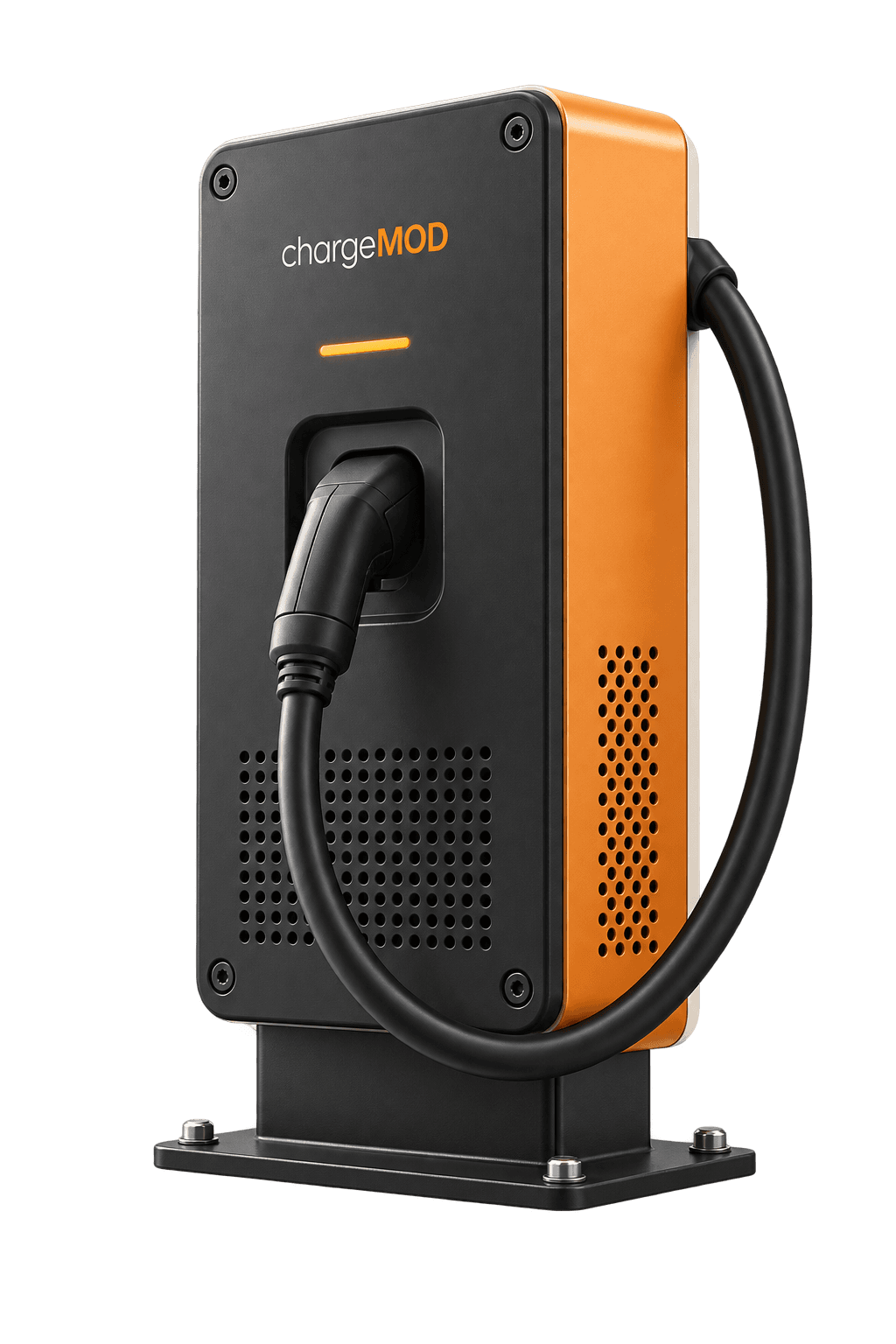
DC Charger for Electric Two Wheelers
Electric two-wheelers are becoming an important part of everyday travel, delivery operations and urban mobility in India. As more electric scooters and motorcycles enter the market, convenient charging infrastructure is essential for riders who want to reduce waiting time and keep their vehicles ready for daily use. A DC charger for electric two wheelers provides a dedicated charging solution for compatible vehicles by supplying direct current to the battery through the vehicle’s approved charging interface.
Unlike conventional AC charging, where the vehicle’s onboard charger converts AC power into DC, a DC fast charger performs the conversion within the charging equipment. This arrangement can support faster charging when the vehicle’s battery, battery management system (BMS), connector and charging specifications allow it. Available power options may include a 3 kW DC charger for electric scooters, a 6 kW DC charger for electric two wheelers and higher-capacity configurations for suitable vehicles and charging locations.
For businesses, fleet operators, parking facilities and public charging providers, a properly selected DC charging station for 2 wheelers can improve charging access and operational convenience. The right solution depends on vehicle compatibility, expected demand, electrical infrastructure and installation conditions. Choosing these factors carefully helps build a charging setup that serves riders reliably while supporting future expansion.
What Is a DC Charger for Electric Two Wheelers?
A DC charger for electric two wheelers is charging equipment designed to supply direct current to compatible electric scooter and motorcycle batteries. It includes power conversion and control components that regulate charging according to the vehicle’s requirements and the supported charging protocol.
These chargers are commonly considered for public charging stations, commercial properties, fleet depots, delivery hubs and other locations where reducing charging downtime is important. Depending on the model, a charger may include a single charging gun or multiple connectors, network connectivity, user authentication and charging-session monitoring.
However, not every electric scooter supports external DC fast charging. Some vehicles are designed to charge through a dedicated AC socket or a manufacturer-supplied portable charger. Before purchasing an electric scooter DC fast charger, check the vehicle manufacturer’s charging specifications, connector type and compatibility requirements.
How Does a Two-Wheeler DC Charging Station Work?
A DC charging station uses power electronics to convert the incoming AC supply into controlled DC power. The charging system communicates with or follows the requirements of the compatible vehicle to manage the charging process.
A typical charging session involves these steps:
- Vehicle connection: The rider connects the approved charging gun to the compatible vehicle.
- Authentication: Depending on the charger, access may be enabled through an app, QR code, RFID or another supported method.
- Compatibility and safety checks: The charger and vehicle establish the conditions required to begin charging.
- Power delivery: The charger supplies DC power within the limits supported by the vehicle and battery management system.
- Charging monitoring: The system monitors relevant charging parameters and displays available session information.
- Session completion: Charging stops when the session ends, the vehicle reaches its charging limit or a safety condition requires it to stop.
The actual charging time depends on battery capacity, starting charge level, vehicle charging limits, temperature and the power available throughout the session.
DC Fast Charger for Electric Scooters: Available Power Options
The charging capacity should match the vehicles that will use the station. Higher power does not automatically mean every scooter will charge faster; the vehicle must be able to accept the supplied power.
3 kW DC Charger for Electric Scooters
A 3 kW DC charger for electric scooters can suit locations serving compatible electric two-wheelers with relatively modest charging requirements. It may be considered for small public charging points, workplaces, selected retail locations and fleet facilities with regular but manageable demand.
This option can be useful where the available electrical supply, installation budget and vehicle charging limits favour a lower-power setup. Before choosing a 3 kW unit, confirm whether its connector and charging protocol match the intended scooter models.
6 kW DC Charger for Electric Two Wheelers
A 6 kW DC charger for electric two wheelers offers a higher rated power level for compatible vehicles. It may be appropriate for busy charging locations, delivery fleets and commercial sites that need to serve riders throughout the day.
The benefit depends on the vehicle’s maximum DC charging acceptance. If a scooter can only accept a lower charging rate, installing a higher-rated charger will not necessarily reduce its charging time proportionately.
9 kW DC Charger for Electric Two Wheelers
A 9 kW DC charger for electric two wheelers may be considered for charging deployments that need more capacity than a lower-powered unit can provide. It can be relevant for selected fleet operations or commercial sites where compatible vehicles and the electrical installation support this rating.
Availability, connector configuration and supported charging protocols vary by manufacturer. Confirm the actual rated output, input requirements and vehicle compatibility before specifying a 9 kW charger for a project.
12 kW DC Charger for Electric Two Wheelers
A 12 kW DC charger for electric two wheelers is a higher-capacity option for suitable vehicles and locations with sufficient electrical infrastructure. It may be considered for high-demand public charging sites, larger fleet depots and commercial charging facilities.
This rating should be selected only after checking the supported vehicle models, charging gun configuration, maximum output current and site power availability. A 12 kW charger cannot force a vehicle to accept 12 kW if its battery or charging system supports a lower rate.
Comparing DC Charger Ratings
| Charger rating | Potential use case | What to verify |
|---|---|---|
| 3 kW | Small charging locations and compatible scooter users | Connector compatibility and expected daily demand |
| 6 kW | Busier commercial sites and fleet operations | Vehicle charging acceptance and electrical capacity |
| 9 kW | Selected higher-demand deployments | Availability of the rating and supported charging protocol |
| 12 kW | High-utilisation charging locations and suitable fleets | Vehicle limits, supply requirements and installation design |
These are general selection considerations, not guaranteed charging-time comparisons. The most suitable rating depends on the vehicles and the conditions at the installation site.
Key Features of an Electric Two Wheeler Fast Charging Station
A modern electric two wheeler fast charging station should provide more than power delivery. Depending on the product and configuration, useful features may include the following.
Vehicle-Compatible Charging Connectors
Connector compatibility is one of the first things to verify. Different electric two-wheelers may use different charging interfaces and communication methods. Some DC charging products are offered with Type 6 or Type 7 connector options, but these names should not be treated as proof that a charger will work with every scooter.
Before ordering, prepare a list of the vehicle models that will use the station and confirm compatibility with the charger supplier and vehicle manufacturer.
Electrical and Charging Protection
Appropriate protection helps manage electrical faults and abnormal operating conditions. Depending on the charger design, protection features may include:
- Input overvoltage and undervoltage protection.
- Output overcurrent or short-circuit protection.
- Earth-fault or earth-detection functions, where applicable.
- Reverse-polarity protection where supported by the design.
- Emergency stop facilities on applicable models.
- Temperature monitoring and protective shutdown.
- Controlled start-up and charging termination.
The exact protection functions vary by product. Review the technical datasheet and applicable compliance documentation rather than assuming that every charger includes the same features.
Smart Connectivity and Remote Monitoring
Connected charging equipment can help operators monitor charger status, charging sessions and usage. Depending on the system, features may include mobile connectivity, remote diagnostics, software updates, session records, QR-based access and online payment integration.
For commercial installations, ask whether the charger supports a central charging management system (CMS), what communication protocols it uses, and whether network or software subscriptions apply. Features such as OCPP support should be verified against the specific charger model and software configuration.
Indoor and Outdoor Installation Options
Some DC chargers can be wall-mounted or installed on a suitable stand. Outdoor installations require particular attention to weather exposure, dust, water ingress, cable management and physical protection. Check the product’s IP rating and installation instructions to confirm whether it is appropriate for the intended environment.
Where Can a DC Charging Station for 2 Wheelers Be Installed?
A DC charging station for 2 wheelers can serve different types of locations, provided the site has suitable electrical infrastructure and the intended vehicles are compatible.
Public charging locations: Retail areas, parking facilities and mobility hubs can offer charging to riders who need to recharge while away from home.
Delivery and logistics fleets: Food delivery, courier and local logistics businesses may benefit from dedicated charging facilities that help organise vehicle availability across shifts.
Commercial properties: Offices, shopping complexes, service centres and other businesses can consider charging facilities as an additional service for customers, employees or fleet vehicles.
Fleet depots: Businesses with multiple compatible electric scooters can plan charging around vehicle schedules, expected energy demand and available electrical capacity.
Residential communities: Apartments and housing communities may evaluate DC charging for compatible scooters when there is a clear need, sufficient power capacity and an appropriate installation arrangement. For many private users, a manufacturer-approved AC charging method may be more suitable.
How to Choose the Right DC Fast Charger for Electric Scooters
Selecting the right DC fast charger for electric scooters involves assessing the vehicles, site and operating model together. A charger with a high power rating is not automatically the best investment.
1. Check Vehicle Compatibility First
Identify the make and model of every vehicle expected to use the station. Confirm the connector, supported charging protocol, battery voltage range and maximum DC charging power. Where a fleet includes different scooter models, check whether one charger configuration can support all of them.
2. Estimate Daily Charging Demand
Consider the number of vehicles that will charge each day, their typical energy requirements and the hours when charging demand is highest. A small site may not need the same capacity as a busy delivery depot. Estimate demand using realistic charging patterns rather than assuming continuous full-power operation.
3. Assess the Electrical Supply
Have a qualified electrical professional assess the available supply, connected load, earthing, cable sizing, protective devices and any additional infrastructure required. Higher-power equipment may require changes to the existing electrical installation.
4. Compare Total Installation Costs
The purchase price is only one part of the investment. Ask for a clear breakdown of installation, wiring, mounting, electrical upgrades, commissioning, connectivity and ongoing software or maintenance costs.
5. Review Software and Payment Requirements
For public and commercial use, consider how users will start charging, pay for sessions and find charger availability. Check whether the solution supports the payment methods, reporting and remote management functions required for your business.
6. Check Warranty and After-Sales Support
Confirm the warranty period, service coverage, spare-parts availability and expected support process. A charger that is out of service can affect rider convenience and business operations, so access to dependable technical support is important.
DC Charging vs AC Charging for Electric Two Wheelers
Both AC and DC charging can be useful, but they serve different vehicle designs and charging needs. The correct choice depends on the manufacturer’s charging interface and the way the vehicle is intended to be charged.
| Consideration | DC charging | AC charging |
|---|---|---|
| Power conversion | Performed within the external charging equipment | Normally performed by the vehicle’s onboard charger |
| Vehicle compatibility | Requires support for the specific DC interface and protocol | Requires a compatible AC input or approved charging arrangement |
| Common consideration | Useful when the vehicle supports DC charging and reduced charging downtime is needed | Can suit routine or longer-duration charging |
| Site planning | Depends on charger rating, supply requirements and vehicle limits | Depends on the AC charger or supply, vehicle onboard charger and installation |
| Best selection approach | Verify DC connector and communication compatibility | Follow the vehicle manufacturer’s approved AC charging method |
A DC charger should not be purchased simply because it has a higher power rating than an AC charger. First confirm that the vehicle is designed to use that charging method.
Safety and Installation Requirements
A well-planned installation supports reliable operation and helps reduce avoidable electrical risks. Charging equipment should be installed in accordance with its manufacturer’s instructions and the applicable Indian standards, electrical regulations and site requirements.
Before commissioning a DC charging station for 2 wheelers, consider these requirements:
- Site assessment: Confirm the location, mounting arrangement, vehicle access, cable reach and protection from accidental impact.
- Electrical assessment: Check supply capacity, earthing, protective devices, wiring and the need for a dedicated connection.
- Product compliance: Review the charger’s technical documentation and applicable BIS/IS requirements for the specific equipment category.
- Environmental conditions: Verify the rated operating temperature and ingress protection for the installation environment.
- User safety: Provide clear operating instructions, suitable cable storage and access to emergency controls where fitted.
- Commissioning: Test the installation and verify charging operation with compatible vehicles before opening it for regular use.
- Maintenance: Follow the recommended inspection schedule and arrange prompt attention to damage, unusual heating or repeated faults.
India’s EV charging infrastructure guidelines and relevant BIS standards provide the wider regulatory context for charging equipment and installations. The precise requirements depend on the charger type and application, so compliance should be confirmed for the specific product and site.
Business Benefits of an Electric Scooter DC Fast Charger
For businesses serving electric two-wheelers, the right charging equipment can support operational planning as well as customer convenience.
- Reduced charging downtime: Compatible vehicles may recharge more quickly than with slower charging methods, depending on battery and charger limits.
- Fleet scheduling: Dedicated charging facilities can help operators organise charging between delivery rounds or work shifts.
- Additional customer services: Retail and commercial properties can offer charging access to suitable electric scooter users.
- Usage visibility: Connected chargers may provide session records and utilisation data that help operators understand demand.
- Scalable infrastructure: A site can be planned with future expansion in mind, subject to power availability and changing vehicle requirements.
Charging revenue and operating savings depend on utilisation, electricity tariffs, charging prices, installation costs, service expenses and other business factors. Assess these variables before making a commercial investment.
Choose the Right DC Charger for Electric Two Wheelers
Choosing a DC charger for electric two wheelers starts with understanding the vehicles that will use it and the charging experience the location needs to provide. A 3 kW unit may suit a smaller charging setup, while 6 kW, 9 kW or 12 kW options may be worth evaluating for compatible vehicles and higher-demand applications. The correct choice depends on vehicle charging limits, connector compatibility, expected usage and the available electrical infrastructure—not simply the highest power rating.
For fleet operators, businesses and charging point owners, it is equally important to consider installation requirements, protective features, connectivity, payment management, warranty and ongoing technical support. Reviewing these factors before purchase helps avoid compatibility problems and supports a more dependable charging operation.
When planning a new charging facility or upgrading an existing one, compare the technical requirements with the needs of your users and the long-term goals of your site. Explore EV charging solutions in India to understand the wider charging infrastructure options available for different applications. With appropriate equipment selection, professional installation and regular maintenance, an electric two wheeler fast charging station can become a practical part of a reliable EV charging network.
Frequently Asked Questions About DC Chargers for Electric Two Wheelers
1. What is a DC charger for electric two wheelers?
A DC charger for electric two wheelers is equipment that converts incoming AC power into controlled DC power and supplies it to a compatible electric scooter or motorcycle battery through an approved charging interface.
2. Can every electric scooter use a DC fast charger?
No. Some electric scooters support DC fast charging, while others are designed for AC charging through a manufacturer-approved charger. Check the vehicle’s specifications, connector and charging protocol before selecting a DC charging station.
3. What is the difference between a 3 kW and a 6 kW DC charger?
The ratings indicate the chargers’ nominal power capacity. A 6 kW charger can provide a higher rated output than a 3 kW charger, but the vehicle must support that level of charging to benefit from it. Battery limits and charging conditions also affect performance.
4. Is a 9 kW DC charger available for electric two wheelers?
A 9 kW DC charger may be available in certain product configurations or deployments, but availability varies by manufacturer. Confirm the rated output, connector, supported vehicles and electrical requirements before specifying one.
5. Is a 12 kW DC charger suitable for an electric scooter?
It can be suitable only when the scooter and charging interface support the required DC charging conditions. A vehicle with a lower charging limit will not necessarily charge faster when connected to a higher-rated unit.
6. How long does a DC fast charger take to charge an electric scooter?
Charging time depends on battery capacity, starting charge level, the vehicle’s maximum charging rate, charger output, temperature and battery management limits. The charger’s rated power alone is not enough to calculate an exact charging time.
7. What connectors are used for two-wheeler DC charging?
Connector types vary between vehicle and charger designs. Some charging products offer Type 6 or Type 7 DC connectors. Always verify the exact connector and communication compatibility with the intended vehicle models.
8. Can a DC charging station be used by multiple electric scooters?
A charger with multiple connectors may support more than one vehicle, but the number of vehicles that can charge simultaneously and the power available to each depend on the specific design. Confirm whether each connector can operate at the same time and how output power is shared.
9. Can I install a DC charging station at a commercial property?
Yes, provided the equipment is suitable for the intended vehicles and the site meets the required electrical, safety and installation conditions. A professional site assessment can establish the necessary supply capacity, mounting and protection arrangements.
10. What should I check before buying an electric two wheeler fast charging station?
Check vehicle compatibility, connector type, rated power, electrical input, safety protections, weather rating, connectivity, payment options, warranty, installation costs and after-sales support. For commercial use, also consider charging demand and the cost of operating the station.