

DC 4-Wheeler Charging Station for Fast EV Charging
Explore DC 4-wheeler charging stations, from 30 kW to 240 kW. Compare fast EV chargers for commercial sites, fleets and public charging in India.
30–240 kW DC
Discuss your charging setup Explore compatibility, power and installation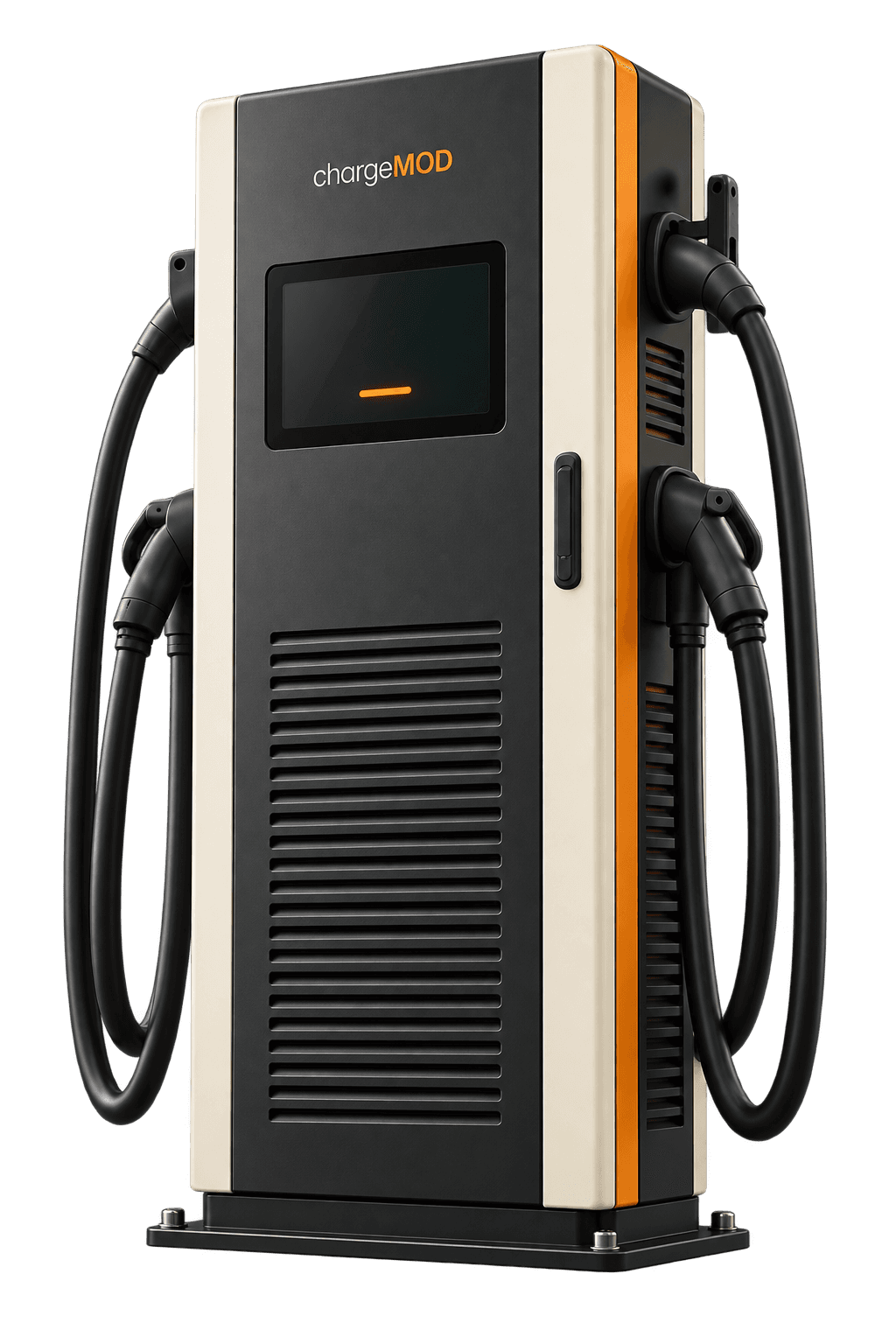
DC 4-Wheeler Charging Stations
As electric cars become increasingly popular in India, the demand for reliable and faster charging infrastructure continues to grow. A DC 4-wheeler charging station provides a practical solution for charging compatible electric cars at commercial locations, highway stops, fleet facilities, shopping centres, hotels, and other destinations where reducing charging time is important.
Unlike an AC charger, which supplies alternating current that the vehicle's onboard charger converts into direct current, a DC fast charger performs this conversion within the charging equipment. It then delivers DC electricity directly to the vehicle's battery system through a compatible charging interface. This arrangement allows supported electric cars to charge at higher power levels than many conventional AC charging setups.
DC charging equipment is available in different power ratings to accommodate different vehicles, locations, and operating requirements. Options such as a 30 kW DC fast charger and a 240 kW DC fast charger serve different charging needs, from selected fleet applications to higher-demand public charging locations.
Selecting the right charging station requires careful consideration of vehicle compatibility, charging power, electrical infrastructure, safety features, and expected usage. A well-planned installation can improve charging convenience, support business operations, and help prepare a property for the growing adoption of electric mobility.
What Is a DC 4-Wheeler Charging Station?
A DC 4-wheeler charging station is an electric vehicle charging system designed to supply direct current to compatible electric cars. It converts electricity from the available AC supply into DC power within the charging equipment, allowing the vehicle's battery to receive energy without relying on the vehicle's onboard AC charger for that conversion.
DC charging is particularly useful when vehicles need to gain a meaningful amount of charge during shorter stops. This makes it suitable for highway charging facilities, public charging hubs, commercial properties, fleet depots, and other locations where vehicle availability matters.
In India, CCS2 is an important connector standard for DC charging of compatible electric passenger vehicles. However, connector compatibility and supported charging specifications vary by vehicle, so the vehicle manufacturer's recommendations should always be checked before installation or use.
A DC charging station typically includes power conversion equipment, a charging connector and cable, a control system, electrical protection, and a user interface. Depending on the model, it may also provide network connectivity, payment integration, remote monitoring, and charging session records.
The charger's rated power is only one part of the overall charging experience. The vehicle's battery management system, maximum supported DC charging power, battery temperature, state of charge, and the station's available output all influence the actual charging rate.
How Does a DC Fast Charger for Electric Cars Work?
A DC fast charger for electric cars follows a controlled process to transfer electricity from the electrical supply to a vehicle's battery.
1. Connecting the Vehicle
The driver parks in the designated charging bay and connects the charging cable to the vehicle's compatible DC charging inlet. The connector must match the vehicle's charging interface.
2. Establishing Communication
The charging station and vehicle exchange the information and control signals required to establish a charging session. The system checks the conditions needed for safe operation before delivering power.
3. Converting AC Electricity into DC
The charging equipment converts the incoming AC electricity into DC electricity. Its power electronics regulate the output according to the vehicle's requirements and the charger's capabilities.
4. Delivering Power to the Battery
Once the required conditions are satisfied, the station supplies DC power to the vehicle. The battery management system monitors battery conditions and communicates the limits within which charging can proceed.
5. Adjusting the Charging Rate
Charging power can change throughout a session. A vehicle may accept higher power during part of the charging process and reduce the rate as the battery approaches a higher state of charge or operating limits.
6. Completing the Session
Charging ends when the vehicle reaches its target, the user stops the session, or the system identifies a condition that requires charging to stop. The connector can then be disconnected according to the equipment's instructions.
This process allows an EV DC fast charger to deliver power according to the vehicle's capabilities rather than simply operating continuously at its maximum rated output.
Key Benefits of a DC Fast Charging Station
A DC fast charging station can offer several advantages for EV drivers, charging operators, and businesses when it is installed in the right location.
Faster Charging for Compatible Electric Cars
DC charging can deliver higher power than many standard AC charging arrangements. This can help drivers recharge during shorter stops, depending on the vehicle's maximum charging rate and battery conditions.
For businesses operating electric cars, reducing charging time may also help improve vehicle availability.
Better Suitability for Public Charging
Public charging locations often serve drivers with different travel schedules and charging requirements. DC fast chargers can support locations where users cannot remain parked for several hours.
Suitable applications include highway facilities, commercial parking areas, transport hubs, and destination charging locations with higher turnover.
Support for Commercial EV Operations
A commercial DC EV charger can help businesses manage charging for company cars, taxis, rental vehicles, and other compatible electric passenger vehicles.
The benefits depend on operating schedules, vehicle usage, electricity costs, and the time available for charging.
Scalable Charging Infrastructure
Charging infrastructure can be planned according to current demand and future expansion requirements. Businesses may begin with a suitable charger configuration and expand later if electrical capacity, space, and commercial demand permit.
Planning the electrical distribution system and cable routes early can help simplify future upgrades.
Remote Monitoring and Charging Management
Depending on the equipment, connected chargers can support remote status monitoring, charging session records, access management, and operational reporting.
These features can help operators identify faults, monitor utilisation, and manage charging locations more effectively.
30 kW DC Fast Charger vs 240 kW DC Fast Charger
Choosing the correct power rating is essential when planning a DC charging installation. A lower-power charger may meet the needs of certain fleet or destination applications, while a higher-power system may be more appropriate for locations with substantial charging demand.
30 kW DC Fast Charger
A 30 kW DC fast charger can be suitable for selected commercial locations, fleet facilities, and destinations where a moderate DC charging rate is sufficient.
It may be useful for vehicles that return to a base regularly or for charging locations where drivers can spend more time parked than they would at a highway rest stop.
Before selecting this option, assess the vehicles' charging capabilities, the expected number of daily sessions, and the time available to charge each vehicle.
240 kW DC Fast Charger
A 240 kW DC fast charger is designed for higher-power charging applications. It may suit public charging hubs, highway locations, and commercial facilities that serve compatible vehicles and require greater charging capacity.
However, the station's rated power should not be interpreted as a guarantee that every connected vehicle will receive 240 kW. The actual output depends on the vehicle's supported charging rate, battery conditions, available power, and the charger's configuration.
Where a station supports multiple connectors, its total rated capacity may be shared between charging sessions according to the equipment's design. Buyers should check whether the advertised rating applies to the entire station, an individual connector, or a specific operating configuration.
Comparing DC Charging Power Options
| Consideration | 30 kW DC charger | 240 kW DC charger |
|---|---|---|
| Potential application | Selected fleet and destination charging | Higher-demand public and highway charging |
| Charging power | Moderate DC output | High DC output |
| Site planning priority | Vehicle demand and suitable supply capacity | High electrical demand, power distribution, and possible load management |
| Vehicle compatibility | Check supported DC charging specifications | Confirm the vehicle can benefit from higher-power output |
| Operational planning | Assess dwell time and daily charging sessions | Assess traffic, simultaneous charging demand, and charger utilisation |
These are general application examples. Actual suitability depends on the vehicle fleet, equipment specifications, electrical supply, and site requirements.
Where Can a DC Charger for Electric Cars Be Installed?
A DC charger for electric cars can serve several types of properties. The most suitable location depends on vehicle movement, expected charging demand, available space, and electrical infrastructure.
Highway and Expressway Charging Stations
Highway charging facilities serve drivers who need to recharge during longer journeys. DC fast charging can be useful where drivers prefer shorter stops and the connected vehicles support the available charging power.
Site selection should consider road access, visibility, vehicle movement, parking space, electrical infrastructure, and the availability of suitable amenities.
Commercial Buildings and Shopping Centres
Shopping centres, business complexes, and other commercial destinations can provide DC charging for visitors and customers. The appropriate charging power depends on typical parking duration and how many vehicles are expected to use the station.
Businesses should also assess whether charging demand will overlap with the property's other major electrical loads.
Hotels and Hospitality Properties
Hotels and destination properties can offer charging facilities for guests who travel by electric car. DC charging may be suitable where vehicles arrive for shorter visits or where faster charging is a priority.
For guests staying overnight, a combination of charging options may be worth considering depending on the property's electrical capacity and customer requirements.
Fleet Depots and Vehicle Rental Businesses
Businesses operating electric taxis, rental cars, and company vehicles may use DC charging to support vehicle turnaround.
The charging system should be selected according to vehicle schedules, battery sizes, charging windows, and the number of vehicles that may need charging simultaneously.
For fleets with predictable operating hours, charging schedules and suitable energy management can help coordinate vehicle availability.
Public Charging Hubs
A public DC fast charging station can support multiple drivers at a designated location. Depending on the site, operators may require payment facilities, user authentication, remote monitoring, and charging network integration.
The business case should consider expected utilisation, electricity costs, site expenses, maintenance, and the charging tariffs offered to users.
How to Choose the Right DC 4-Wheeler Charging Station
Choosing a DC 4-wheeler charging station requires an assessment of both the charging equipment and the environment in which it will operate.
Check Vehicle Compatibility
Confirm that the vehicle supports the charger's connector and DC charging specifications. In India, CCS2 is an important DC charging interface for compatible electric passenger cars, but compatibility should be verified for every vehicle model.
Select the Appropriate Power Rating
The station's output should match the intended use case. A 30 kW charger may suit selected commercial or fleet applications, while a higher-power system may be appropriate for public charging locations with suitable vehicles and electrical infrastructure.
Avoid selecting a charger based only on its maximum advertised output.
Assess Electrical Infrastructure
DC charging equipment requires an electrical supply capable of supporting its rated power and operating requirements. Higher-power installations may require substantial upgrades to the site's electrical distribution system.
A professional site assessment should evaluate the available connection, demand, protection, earthing, cable routes, and any required utility coordination.
Review Safety and Protection Features
Charging equipment should provide suitable protection and monitoring for its design. Depending on the model, this may include overcurrent protection, overvoltage and undervoltage protection, temperature monitoring, fault detection, and emergency stop functionality.
The complete installation should follow the manufacturer's instructions and applicable electrical requirements.
Consider Software and Network Connectivity
Commercial charging operators may benefit from remote monitoring, user authentication, payment integration, charging records, and central management software.
If interoperability is important, check the supported communication protocols and software compatibility. OCPP support, for example, varies by implementation and version and should be verified for the intended system.
Evaluate Maintenance and After-Sales Support
A charging station is a long-term infrastructure investment. Buyers should review warranty terms, technical assistance, maintenance requirements, spare-part availability, and fault-response arrangements before making a decision.
Plan for Future Expansion
If charging demand is expected to increase, assess whether the site can accommodate additional chargers or higher aggregate loads later. Appropriate space allocation, electrical planning, and load management can make future expansion easier.
Installation Requirements for a Commercial DC EV Charger
Installing a commercial DC EV charger involves several technical and operational considerations. The requirements depend on the charger rating, site conditions, electrical connection, and intended use.
Electrical capacity and supply: The site must have an appropriate electrical connection to support the charger's power requirements. Higher-power installations may require additional infrastructure, depending on the available supply and total site demand.
Site layout: The installation should provide adequate space for the charging unit, vehicle parking, connector access, maintenance, and safe movement around the charging area.
Electrical protection: The installation should include the protection, earthing, isolation, and other safety measures required by the equipment design and applicable standards.
Environmental suitability: The charger enclosure and mounting arrangement should be appropriate for the expected exposure to rain, dust, heat, and potential physical impact.
Network and payment integration: Public charging sites may require a compatible software platform for payment, access control, session monitoring, and operational reporting.
Testing and commissioning: Before the station is made available for regular use, the installation should be inspected and tested by qualified personnel. Charging operation, protective systems, connectors, and communication functions should be verified.
In India, the Ministry of Power's Guidelines for Installation and Operation of Electric Vehicle Charging Infrastructure, issued on 17 September 2024, provide a framework for charging infrastructure and have subsequent amendments. Site owners should check the latest applicable guidance. Site owners should confirm the applicable requirements, electrical approvals, and local procedures for their specific installation.
DC Fast Charging Station in India: What Businesses Should Consider
The growth of electric mobility creates opportunities for businesses interested in developing charging infrastructure. However, the success of a DC fast charging station in India depends on more than the availability of charging equipment.
Location is important. Sites near major roads, commercial destinations, transport corridors, and areas with suitable EV demand may offer useful charging opportunities, but actual performance depends on local conditions.
Before investing, businesses should assess:
- Expected demand: Estimate the likely number of charging sessions and the typical energy required per vehicle.
- Electricity costs: Evaluate the applicable electricity tariff, demand-related charges where relevant, and the cost of supplying energy to drivers.
- Equipment investment: Compare charger specifications, installation expenses, electrical upgrades, and ongoing maintenance costs.
- Charging revenue: Consider pricing models, payment arrangements, expected utilisation, and operating expenses.
- Site accessibility: Provide convenient entry, parking, connector access, and safe vehicle movement.
- Operational support: Plan for monitoring, maintenance, customer assistance, and fault resolution.
- Future capacity: Assess whether demand may justify additional charging points or changes to the electrical infrastructure.
For commercial operators, an appropriate combination of equipment, site planning, and charging management can support a more reliable customer experience. Revenue and payback, however, should be evaluated using realistic utilisation assumptions rather than the charger's maximum technical capacity alone.
Choose the Right DC Fast Charging Solution
A DC 4-wheeler charging station can help businesses and property owners provide faster charging for compatible electric cars. Whether the requirement is for a fleet facility, commercial destination, public charging hub, or highway location, the right solution depends on vehicle compatibility, charging demand, available electrical capacity, and the time drivers have available to charge.
A 30 kW DC fast charger may suit selected applications where moderate DC charging power is sufficient. A 240 kW DC fast charger may be more appropriate for higher-demand locations that serve vehicles capable of accepting higher charging power. In both cases, the station's rated output should be considered alongside the vehicle's actual charging capabilities and the site's electrical infrastructure.
A successful installation also requires suitable protection, safe site layout, professional commissioning, and a plan for maintenance. Businesses should evaluate charging demand, operating costs, software capabilities, and future expansion before investing in equipment.
With careful planning, DC fast charging can support convenient EV travel, improve vehicle availability, and help commercial properties respond to changing mobility needs. Explore EV charging solutions in India to identify charging infrastructure options suited to your business, property, and long-term operational requirements.
Frequently Asked Questions About DC 4-Wheeler Charging Stations
1. What is a DC 4-wheeler charging station?
A DC 4-wheeler charging station is an EV charging system that converts AC electricity into DC power within the charger and supplies it to a compatible electric car. It is commonly used in public charging hubs, commercial facilities, fleet depots, and highway locations.
2. How is a DC fast charger different from an AC charger?
An AC charger supplies alternating current, which the vehicle's onboard charger converts for battery storage. A DC fast charger performs this conversion within the charging equipment and supplies DC power directly to the vehicle's battery system through a compatible charging interface.
3. How long does a DC fast charger take to charge an electric car?
Charging time depends on the energy required, charger output, vehicle charging limits, battery temperature, and state of charge. A vehicle may charge faster at lower states of charge and reduce its charging rate as the battery fills.
4. What is a 30 kW DC fast charger used for?
A 30 kW DC fast charger can be suitable for selected fleet applications, commercial facilities, and destinations where moderate DC charging power meets the operational requirement. Its suitability depends on vehicle compatibility and expected charging demand.
5. Is a 240 kW DC fast charger suitable for every electric car?
No. The vehicle must support the charging interface and the relevant power level to benefit from a high-power charger. The actual charging rate may be substantially lower than 240 kW depending on the vehicle, battery conditions, and station configuration.
6. Which connector is used for DC fast charging in India?
CCS2 is an important DC fast-charging connector standard for compatible electric passenger cars in India. However, connector compatibility should always be checked against the vehicle manufacturer's specifications.
7. Can a DC fast charging station be installed at a commercial property?
Yes, provided the property can accommodate the charger and its electrical requirements. The installation should consider power availability, vehicle access, protective devices, cable routing, and any applicable approvals.
8. Is a DC fast charging station a good investment for businesses?
It can be suitable for businesses with sufficient local EV demand and an appropriate site. Investment decisions should account for equipment and installation costs, electricity expenses, maintenance, utilisation, charging tariffs, and operating requirements.
9. Does a higher-power DC charger always charge faster?
Not necessarily. A higher-rated charger can provide more power, but the vehicle's charging limits and battery conditions determine how much power it can accept. The charger's output may also be limited by its configuration or available electrical supply.
10. What should I check before buying a DC charger for an electric car?
Check vehicle compatibility, connector type, rated power, electrical requirements, protection features, environmental suitability, software capabilities, warranty, and service support. Commercial buyers should also evaluate expected charging demand and future expansion plans.